The Cognitive Peptide Stack: A Complete Guide for Canadian Researchers
- Imperial Peptides
- 56 minutes ago
- 4 min read
Interest in cognitive research peptides has continued to grow among Canadian researchers and laboratories heading into 2026. These short chains of amino acids are being studied for their potential interactions with neurological pathways, neuroplasticity, and cellular processes related to brain function. This guide provides an overview of several research peptides that are frequently discussed in Canadian research settings: Semax, Selank, Epithalon, and GHK-Cu.

All information below is intended strictly for educational and laboratory research purposes. These compounds are not approved for human use in Canada.
What Are Nootropic Peptides?
Nootropic peptides are research peptides investigated for their possible effects on cognitive and neurological processes. Unlike many small-molecule compounds, peptides are short sequences of amino acids that can interact with existing biological pathways.
The term “nootropic” was introduced in the 1970s by Dr. Corneliu Giurgea to describe substances studied for effects on learning, memory, and brain protection. In current research, related areas of interest include:
• Neurogenesis (formation of new neurons) • Synaptic plasticity (changes in neural connections) • Neuroprotection (reducing damage to neurons in experimental models) • Expression of neurotrophic factors such as BDNF and NGF • Stress-related pathways that can influence cognition • Cellular ageing processes, including telomere biology
Canadian academic and private research groups continue to examine these compounds under controlled laboratory conditions. The sections below summarize key background and research interest for four commonly discussed peptides.
Semax
Background Semax is a synthetic peptide related to a fragment of ACTH (adrenocorticotropic hormone). It was developed in Russia and consists of seven amino acids with a modification that improves its stability.
Researchers study Semax for its interactions with several neurological systems rather than a single pathway.
Areas of Research Interest • Effects on BDNF (brain-derived neurotrophic factor) levels in experimental models • Influence on nerve growth factor (NGF) expression • Modulation of dopamine and serotonin related pathways • Possible reduction of oxidative stress markers in neural tissue under certain experimental conditions
Research Context Preclinical studies have examined Semax in models related to memory, attention, and neural recovery. In Canada it remains a research compound only and is not approved as a therapeutic product. Researchers interested in this peptide typically review analytical data (purity, identity, and related testing) before use in laboratory work.
Selank
Background Selank is a synthetic analogue of the naturally occurring peptide tuftsin. It was also developed in Russia and has been studied for both anxiolytic and cognitive-related properties in research settings.
Areas of Research Interest • Modulation of GABA-related pathways • Effects on enkephalin-related systems • Possible influence on BDNF expression • Interactions with serotonin and dopamine signalling • Secondary observations related to immune signalling markers such as interleukins
Research Context Because anxiety-related states can affect attention, working memory, and decision-making in experimental models, Selank is sometimes studied alongside cognitive research tools. Canadian researchers examining this peptide generally focus on controlled laboratory protocols and documentation of material quality.
Epithalon (Epitalon)
Background Epithalon is a synthetic tetrapeptide (Ala-Glu-Asp-Gly) derived from research on pineal gland peptides. It is most often discussed in the context of telomere biology and cellular ageing research.
Telomeres are protective structures at the ends of chromosomes that shorten with cell division. Some studies have investigated whether Epithalon can influence telomerase activity, the enzyme involved in maintaining telomere length.
Areas of Research Interest • Pineal gland function and melatonin-related pathways • Antioxidant enzyme activity (such as superoxide dismutase) • Circadian rhythm and sleep-related processes in experimental models • Inflammatory markers relevant to ageing research • Gene expression and cellular senescence pathways
Research Context Epithalon is of interest to researchers studying the links between cellular ageing and neurological function. It is not approved for therapeutic use in Canada and is supplied only for laboratory research.
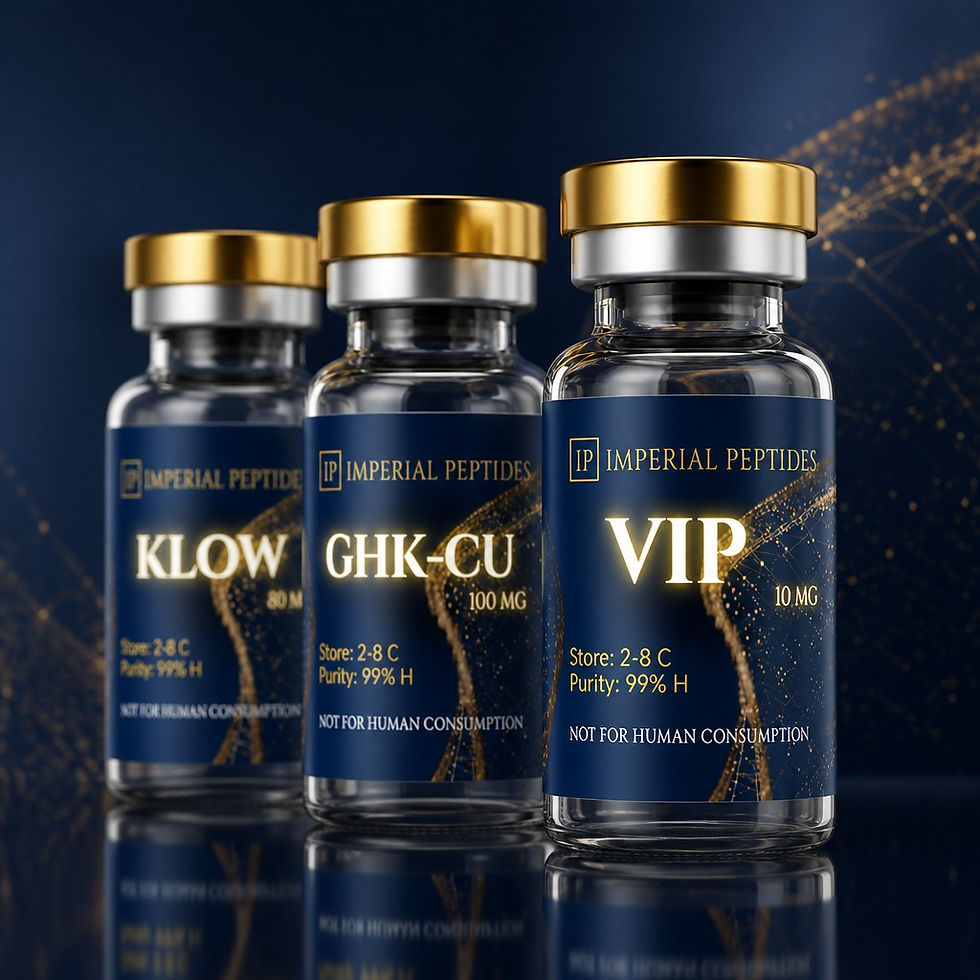
GHK-Cu
Background GHK-Cu is a naturally occurring copper-binding tripeptide (glycyl-L-histidyl-L-lysine) first identified in human plasma. Levels of this peptide appear to decline with age. It has been studied for effects on gene expression, tissue repair pathways, and inflammation-related signalling.
Areas of Research Interest • Modulation of a large number of genes in genomic studies • Influence on nerve growth factor and related pathways • Anti-inflammatory signalling, including NF-κB related pathways • Antioxidant enzyme expression • Collagen and extracellular matrix related processes • DNA repair and cellular stress responses
Research Context Because of its broad activity in gene expression studies, GHK-Cu is examined in research related to neuroprotection, inflammation, and tissue biology. The copper is delivered in a bound (chelated) form, which is relevant to how the complex is handled in experimental systems. Like the other peptides listed here, it is for research use only in Canada.
Quality Considerations for Canadian Researchers
Reliable experimental results depend on well-characterized materials. When evaluating research peptides, laboratories commonly review:
• HPLC purity – percentage of the target compound versus related impurities • Mass spectrometry – confirmation of molecular weight and identity • Certificate of Analysis (COA) – independent documentation of test results • Endotoxin and related contaminant testing when available • Clear research-use-only labelling and supplier documentation
Working with properly tested materials helps reduce unwanted variables in experiments and supports more consistent laboratory data.
Regulatory Context in Canada
In Canada, these peptides are not approved therapeutic products. They fall under research-use frameworks overseen in part by Health Canada. Researchers are responsible for ensuring their work complies with institutional ethics requirements, laboratory safety rules, and any applicable regulations governing research chemicals.
Possession and use for legitimate scientific purposes is distinct from therapeutic or human use. Institutions typically require appropriate oversight for in vitro or in vivo research involving these compounds.
Summary
Semax, Selank, Epithalon, and GHK-Cu continue to attract research interest in Canada for different but sometimes overlapping reasons:
• Semax – studied for effects on neurotrophic factors and related neurological pathways • Selank – examined for interactions with anxiety-related and cognitive signalling systems • Epithalon – investigated in the context of telomere biology and cellular ageing • GHK-Cu – researched for broad gene-expression effects and inflammation-related pathways
All four remain research compounds only. Canadian researchers evaluating these materials should prioritize verified purity, identity testing, and full documentation to support reliable experimental work.
Disclaimer: The peptides discussed in this article are intended strictly for legitimate scientific research purposes. They are not approved medications, supplements, or therapeutic agents in Canada, and are not intended for human consumption or self-administration. This information is provided for educational and research reference only and does not constitute medical advice or recommendations for any use outside controlled laboratory settings. Researchers are solely responsible for compliance with Canadian regulations, institutional ethics requirements, and proper research governance.

Comments