WHow to Read a Certificate of Analysis (COA) for Research Peptides
- Imperial Peptides
- 54 minutes ago
- 2 min read
How to Read a Certificate of Analysis (COA) for Research Peptides
A Certificate of Analysis (COA) is a document that shows the test results for a specific batch of a research peptide. Learning how to read one helps researchers check the quality and identity of the material before using it in experiments.
Here are the main parts you will usually see on a COA and what they mean.
1. Product Name and Batch Number
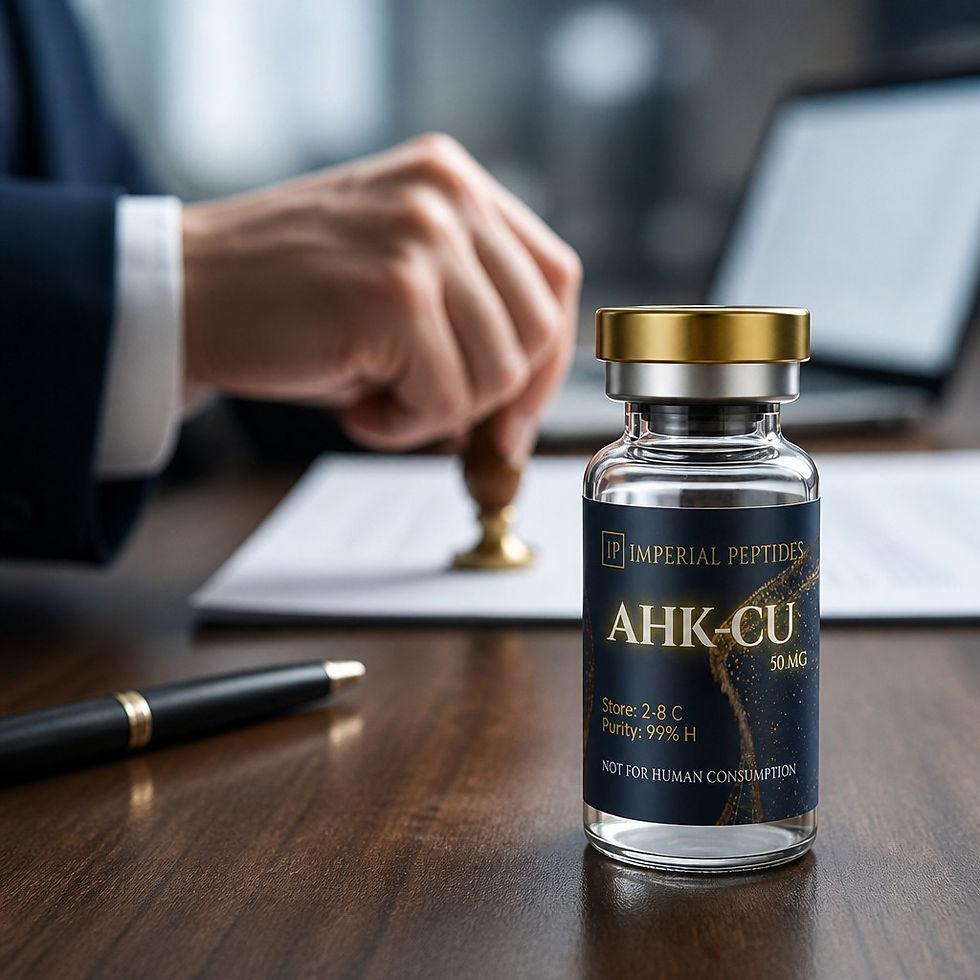
This section lists the name of the peptide and a unique batch or lot number. The batch number is important because it links the COA to that exact group of vials. Always match the batch number on the vial with the one on the COA.
2. Appearance
This describes what the material looks like (for example, white powder or lyophilized cake). It gives a basic visual check that the product matches what is expected.
3. HPLC Purity
HPLC (High-Performance Liquid Chromatography) measures how pure the peptide is. The result is shown as a percentage. A higher percentage means fewer unwanted related compounds are present. Researchers use this number to judge the overall purity of the batch.
4. Mass Spectrometry (MS) or Molecular Weight
This test confirms the identity of the peptide by measuring its molecular weight. The reported value should closely match the expected molecular weight of the peptide sequence. This helps verify that the correct compound is in the vial.
5. Net Peptide Content
This shows how much actual peptide is present compared to the total weight of the material. The total weight can include water, salts, or counter-ions. Net peptide content tells researchers how much usable peptide is really there when calculating experimental amounts.
6. Other Quality Tests (When Included)
Some COAs also report:
Endotoxin levels
Residual solvents
Heavy metals
These extra tests give more information about possible contaminants that could affect sensitive research experiments.
7. Storage Conditions
This section lists the recommended storage temperature and conditions. Following these guidelines helps keep the material stable for laboratory use.
Quick Tips for Researchers
Always check that the batch number matches the vial.
Look at both purity (HPLC) and identity (mass spectrometry).
Prefer COAs that come from independent third-party labs when possible.
Keep a copy of the COA with your research records.
A clear COA gives researchers useful data about the quality and identity of a research peptide. Taking a few minutes to review it carefully supports better experimental planning and more consistent laboratory results.

Comments