Why Proper Peptide Storage Matters for Canadian Researchers
- Imperial Peptides
- 2 hours ago
- 5 min read
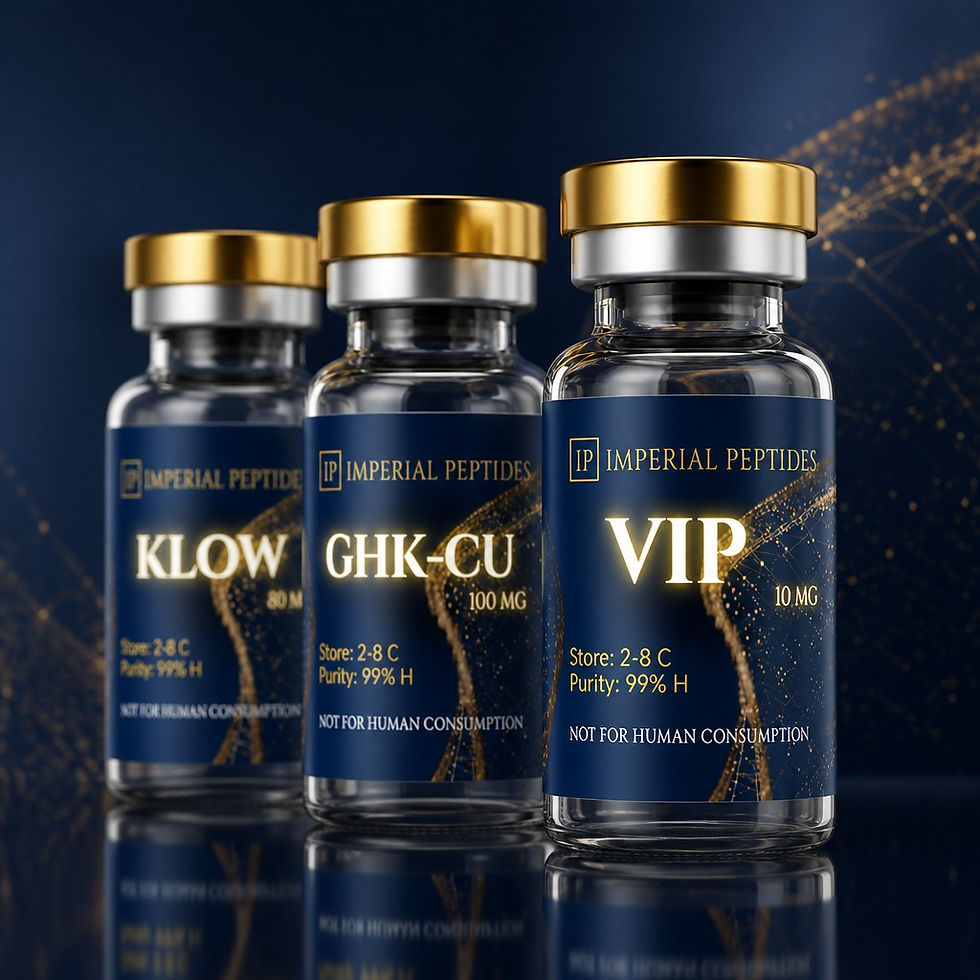
If you have invested in research-grade peptides, how you store them is just as important as where you source them. Improper storage is one of the leading causes of peptide degradation and reduced reliability in laboratory work. For Canadian researchers working in universities, private labs, or other research settings, understanding how to store research peptides correctly helps protect sample integrity throughout experiments.
This guide covers practical storage practices for both lyophilised (freeze-dried) powders and reconstituted (liquid) solutions.
Understanding Peptide Forms: Lyophilised vs Reconstituted
Research peptides are typically supplied in two forms, and each has different storage needs.
Lyophilised Peptides (Freeze-Dried Powder) Lyophilised peptides have had the moisture removed, leaving a stable powder or cake. This is the form in which most research peptides are shipped. Without water present, chemical breakdown, oxidation, and microbial growth happen much more slowly. When stored properly, many lyophilised peptides can remain stable for 12 months or longer.
Reconstituted Peptides (Liquid Solutions) Once a peptide is dissolved in a liquid (such as bacteriostatic water or sterile water), it becomes more vulnerable to degradation. Liquid solutions can be affected by bacterial growth, temperature changes, repeated freeze-thaw cycles, and oxidation. For this reason, reconstituted peptides have a shorter usable life and need more careful handling.
Lyophilised Peptide Storage
Short-Term Storage (Up to About 4 Weeks) If you plan to use the peptide within a month, refrigeration at 2°C to 8°C is usually enough for most sequences.
• Keep vials tightly sealed and protected from light • Store them toward the back of the refrigerator where the temperature is more stable • Avoid the door area, which warms up every time it is opened • Include a desiccant packet in the storage container to reduce moisture
Long-Term Storage (Months or Longer) For longer storage, keep lyophilised peptides at –20°C or colder. A standard laboratory freezer works well. Some peptides that contain sensitive amino acids (such as methionine, cysteine, or tryptophan) may benefit from –80°C storage.
• Place vials in a sealed container or bag with a desiccant • Label each vial clearly with the peptide name, lot number, and date received • Keep them away from strong-smelling chemicals or solvents • Use a dedicated freezer box or rack so vials are not damaged or misplaced
Important: Warm Vials Before Opening One of the most common mistakes is opening a cold vial right away. Moisture from the air can condense inside the vial and introduce water into the powder, which speeds up degradation. Let sealed vials sit at room temperature for 15–30 minutes before opening them. This simple step helps protect the material.
Reconstituted Peptide Storage
Choosing a Reconstitution Solvent The liquid you use affects both solubility and how long the solution remains usable.
• Bacteriostatic water (BAC water) – Contains 0.9% benzyl alcohol, which helps limit bacterial growth. This is the most common choice for multi-dose research use. • Sterile water – Suitable for single-use or very short-term work, but it has no preservative. • Dilute acetic acid (0.1%–1%) – Sometimes used for peptides that do not dissolve well in water. • Phosphate-buffered saline (PBS) – Used in some protocols that require a physiological buffer; check compatibility first.
Bacteriostatic water is generally preferred when a vial will be accessed more than once, because the preservative reduces the risk of contamination with each withdrawal. Always use a new sterile needle for each draw.
Temperature Guidelines for Reconstituted Solutions • 2°C to 8°C – Suitable for solutions you expect to use within about 2–4 weeks (especially those made with bacteriostatic water). • –20°C – An option for longer storage, but only if you divide the solution into single-use aliquots first. • Room temperature – Not recommended. Even a few hours can speed up degradation for many peptides.
Avoiding Freeze-Thaw Damage Each time a frozen liquid peptide is thawed and refrozen, it experiences physical and chemical stress that can reduce quality. The best approach is to divide the reconstituted solution into small single-use volumes before freezing. Thaw only what you need for a given experiment and do not refreeze the leftover portion.
Environmental Factors That Affect Peptide Stability
Moisture and Humidity Lyophilised peptides readily absorb moisture. Keep vials sealed, use desiccants, and always bring them to room temperature before opening.
Light Exposure Light, especially ultraviolet light, can damage certain peptide sequences (particularly those containing tryptophan, tyrosine, or phenylalanine). Store vials in opaque containers or protect them from direct lab lighting when possible.
Oxygen and Oxidation Peptides that contain methionine or cysteine are more prone to oxidation. Limit the time vials are open to air. In some cases, researchers use inert gas or antioxidant-containing buffers for sensitive sequences.
Temperature Fluctuations Even if the average temperature is correct, repeated ups and downs can cause damage over time. A dedicated refrigerator or freezer that is not opened constantly is better than a frequently used shared unit. Frost-free freezers can also create temperature swings during defrost cycles, so a manual-defrost unit is often preferred for long-term storage.
Practical Storage Checklist
• Store lyophilised peptides at –20°C or colder for long-term use • Include desiccant in storage containers • Allow cold vials to warm to room temperature before opening • Keep reconstituted solutions at 2°C–8°C and aim to use them within a few weeks • Aliquot reconstituted solutions before freezing to avoid repeated freeze-thaw cycles • Prefer bacteriostatic water for multi-dose vials • Protect vials from light • Label every vial with peptide name, date, concentration, and lot number • Use sterile technique during reconstitution and withdrawals.
Common Mistakes to Avoid
• Opening cold vials immediately (causes condensation) • Reconstituting more material than you will use in the near term • Using plain sterile water for vials that will be accessed multiple times • Storing peptides in a frost-free freezer that cycles temperature • Failing to label vials thoroughly
Starting with Quality Material
Good storage practices cannot fix a poor-quality starting product. Researchers should begin with peptides that have clear documentation, including purity and identity testing (such as HPLC and mass spectrometry results on a Certificate of Analysis). Properly characterized material, combined with careful storage, supports more consistent laboratory results.
Frequently Asked Questions
How long can lyophilised peptides be stored? When kept dry and sealed at –20°C, many lyophilised peptides remain usable for 12–24 months. More sensitive sequences may benefit from colder storage.
Can reconstituted peptides be frozen? Yes, but only after dividing them into single-use aliquots so you avoid repeated freeze-thaw cycles.
How long does a reconstituted solution last in the refrigerator? Solutions made with bacteriostatic water and stored at 2°C–8°C are often used within about 4 weeks when handled cleanly. Solutions made with plain sterile water should be used much sooner or frozen in aliquots.
Is bacteriostatic water the same as sterile water? No. Bacteriostatic water contains a preservative (benzyl alcohol) that helps limit bacterial growth. Sterile water does not.
Do I need a special freezer? A standard laboratory freezer at –20°C is adequate for most work. A manual-defrost model is preferable. Very sensitive materials or very long-term storage may call for a –80°C freezer.
Disclaimer The information in this article is intended for educational and laboratory research purposes only. Research peptides are not approved therapeutic products in Canada and are not intended for human or veterinary use. Researchers are responsible for following applicable Canadian regulations, institutional guidelines, and proper laboratory practices.

Comments